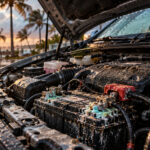
The storm has passed. The roads are reopening, the water has receded, and your vehicle appears to be completely normal.
You turn the key, the engine starts, and everything seems fine.
Unfortunately, when a vehicle has been exposed to flooding, especially the saltwater associated with coastal storm surge, the absence of immediate problems does not necessarily mean the electrical system escaped damage.
For drivers in Naples and throughout Southwest Florida, understanding what happens after water exposure is particularly important during hurricane season.
Electrical damage can develop gradually, affecting connections, wiring, sensors, electronic modules, and battery components long after the original exposure.
1. Saltwater Creates a Different Kind of Electrical Risk
Freshwater and saltwater do not affect automotive electrical systems in exactly the same way.
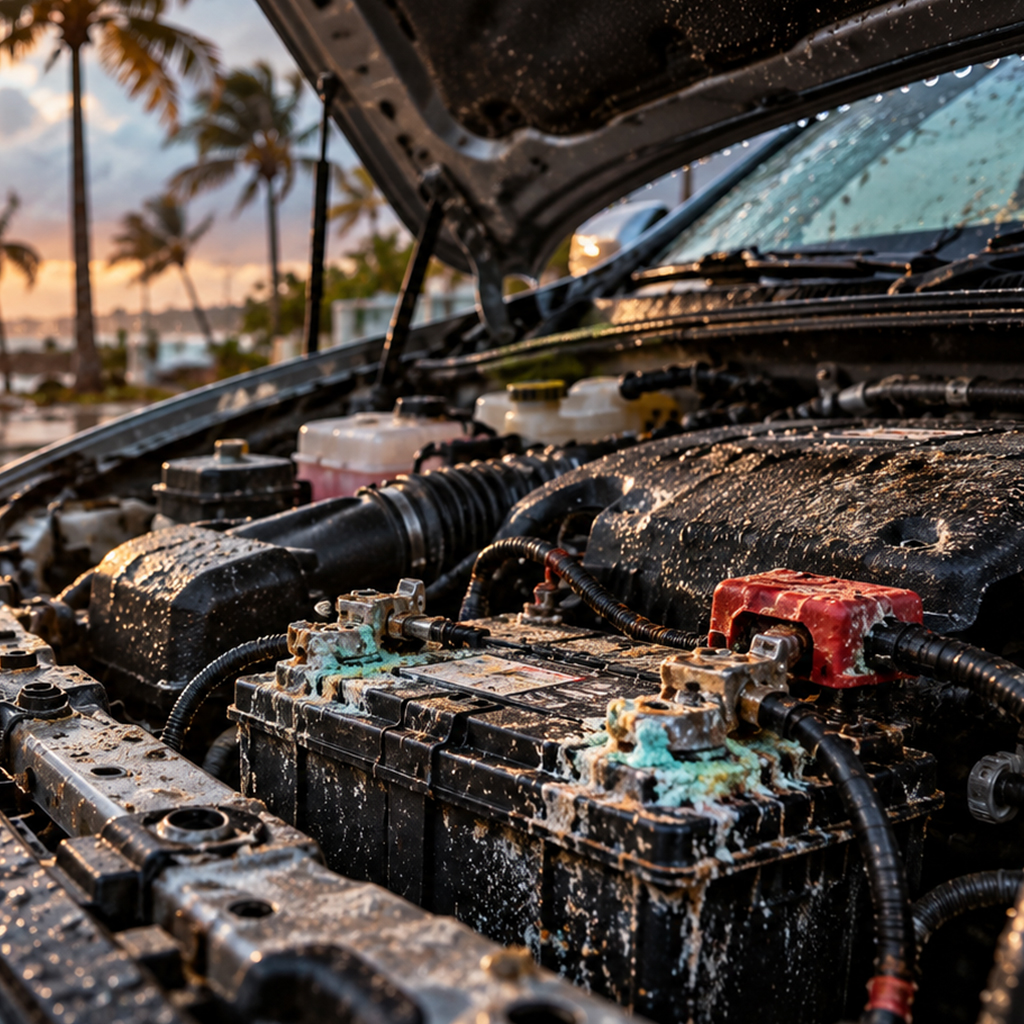
Saltwater contains dissolved minerals that increase electrical conductivity and accelerate corrosion.
When it reaches electrical connectors, exposed wiring, terminals, or electronic components, it can create conditions for unintended electrical current paths and progressive deterioration.
Even after visible moisture disappears, salt deposits may remain.
Those deposits can continue attracting moisture from the surrounding environment, particularly in humid coastal climates.
This means a vehicle may develop electrical symptoms well after the initial exposure.
2. Corrosion Can Spread Inside Electrical Connections
Many drivers associate corrosion with visible deposits around battery terminals.
However, corrosion can develop in less accessible locations.
Electrical connectors, grounding points, fuse boxes, wiring harnesses, and control module connections may all be vulnerable after water exposure.
The problem becomes more complicated when moisture enters areas that are difficult to inspect.
A connection may initially continue functioning while corrosion gradually increases electrical resistance.
Eventually, that resistance can interfere with the operation of connected components.
The resulting symptoms may appear unrelated to the original flooding.
3. Modern Vehicles Have Electronics Throughout the Body
Automotive electrical systems are no longer concentrated exclusively beneath the hood.
Modern vehicles contain electronic components beneath seats, inside doors, behind dashboard panels, near the trunk, and throughout the passenger compartment.
Some modules are installed relatively close to the vehicle floor.
This matters because even moderate water intrusion can affect components that drivers do not normally see.
Power seat controls, communication modules, airbag system components, convenience electronics, and other systems may be exposed depending on the vehicle’s design and the water level.
A vehicle does not need to be completely submerged for electrical damage to become a concern.
4. The Battery May Not Be the Original Problem
After water exposure, some drivers notice that their vehicle begins experiencing starting difficulties.
The natural assumption is that the battery needs replacement.
Sometimes the battery has indeed been damaged or weakened.
However, electrical connections, charging components, or abnormal electrical consumption may also contribute to the problem.
For example, corrosion at a grounding point can interfere with reliable electrical operation.
A damaged electronic module may remain active when the vehicle is parked, increasing battery consumption.
Replacing the battery without investigating the cause may fail to resolve the underlying issue.
5. Warning Lights Can Reveal Deeper Problems
Unexpected dashboard warnings following water exposure deserve attention.
Depending on the affected components, drivers may notice alerts involving charging systems, electronic stability controls, braking systems, airbags, or other vehicle functions.
Some warnings may appear intermittently.
Others may occur only when humidity increases or the vehicle reaches a particular operating temperature.
This inconsistency can make electrical problems difficult to diagnose.
The important point is that warning lights should not automatically be dismissed simply because the vehicle still appears to drive normally.
6. Saltwater Exposure Can Affect the Charging System
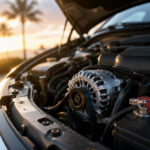
The alternator plays an essential role in maintaining electrical power while the engine is operating.
If water reaches the alternator or its electrical connections, corrosion and contamination may affect its performance.
The severity depends on the amount and type of exposure, the vehicle’s design, and the condition of the affected components.
Symptoms can include charging warnings, inconsistent electrical behavior, or a battery that repeatedly loses charge.
Professional evaluation helps determine whether the issue involves the alternator, battery, connections, or another component.
7. Electric and Hybrid Vehicles Require Additional Caution
Electrified vehicles introduce another important consideration.
Hybrid and electric vehicles contain high voltage components that require specialized safety procedures.
After flooding, especially saltwater flooding, these systems may present serious electrical and fire hazards.
Drivers should never attempt to inspect, disconnect, charge, or restart a flood damaged electric or hybrid vehicle without appropriate professional guidance.
A qualified professional familiar with the manufacturer’s procedures should evaluate the vehicle.
If a vehicle has been submerged or significantly exposed to floodwater, the safest approach is to avoid operating it until the damage has been assessed.
8. A Vehicle That Starts Is Not Necessarily Safe
One of the most misleading signs after flooding is a successful engine start.
A running engine confirms only that certain systems are functioning at that moment.
It does not establish that the vehicle’s electrical, braking, safety, or mechanical systems are undamaged.
Water can contaminate fluids, damage bearings, affect braking components, and create corrosion in locations that are not immediately visible.
Attempting to start a vehicle that may have taken water into the engine can also cause severe mechanical damage.
If floodwater entered the passenger compartment, engine bay, or critical vehicle systems, professional inspection should come before attempting to operate the vehicle.
9. What Drivers Should Do After Suspected Flood Exposure
The first priority is personal safety.
Do not enter floodwater to retrieve a vehicle, and do not attempt to drive through flooded roads.
Once conditions are safe, document visible damage and contact your insurance provider when appropriate.
If the vehicle was submerged, exposed to storm surge, or had water enter the cabin, avoid starting, charging, or jump starting it until a qualified professional has evaluated the risks.
For vehicles without significant water intrusion, routine battery and charging system inspections may help identify ordinary electrical issues, but these tests do not replace a comprehensive flood damage assessment.
The distinction is important because not every electrical problem can be safely resolved through roadside assistance.
10. Why Coastal Drivers Should Pay Attention After Hurricane Season
Southwest Florida’s combination of coastal geography, high humidity, seasonal storms, and salt exposure creates conditions that deserve special attention.
Not every vehicle exposed to heavy rain will develop electrical problems.
Normal rainfall is very different from floodwater entering the vehicle or saltwater reaching sensitive components.
However, when significant exposure occurs, the consequences may continue developing long after the weather improves.
Keeping records of the incident, documenting symptoms, and arranging appropriate inspections can help drivers make informed decisions about repairs and insurance claims.
Conclusion
The most serious consequences of a storm are not always visible when the skies clear.
For vehicles exposed to floodwater or saltwater, electrical deterioration may continue long after the initial event. Recognizing the difference between an ordinary battery problem and possible flood damage is essential.
At Car Battery Naples, we understand the electrical challenges that Southwest Florida drivers face. Mobile battery and charging system services can help with many routine automotive problems, but vehicles with suspected flood damage require a broader professional safety assessment before anyone attempts to restart or service them.
When it comes to storm related vehicle damage, protecting yourself is always more important than getting the engine running.